
- Recipient: FNTI (First Nations Technical Institute)
- Region: Tyendinaga Mohawk Territory
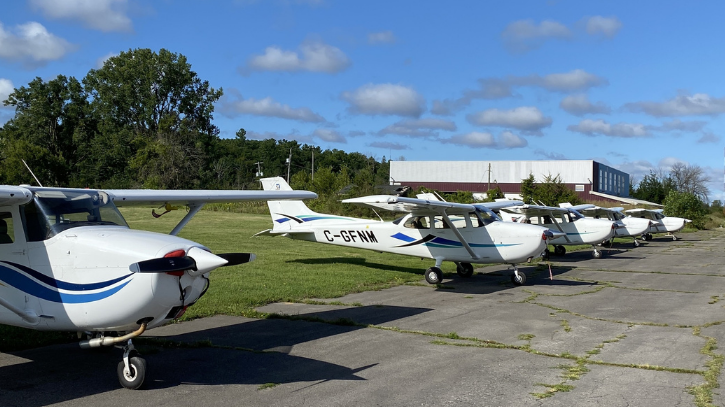
“At FNTI, aviation is about far more than flight training. It is about creating pathways for Indigenous learners to access meaningful careers, support their families and communities, and see themselves represented in industries where Indigenous people have historically been underrepresented. ”
In 1985, Chief Earl Hill of the Tyendinaga Mohawk Council created the First Nations Technical Institute (FNTI). The school was built for Indigenous learners and grounded in the belief that education is a path to healing, strength and self‑determination. Today, FNTI is a fully recognized Indigenous‑owned and governed post‑secondary institute offering accredited programs rooted in Indigenous knowledge systems.
“We are very different,” says Suzanne Brant, President of FNTI and member of the Mohawks of the Bay of Quinte, Tyendinaga Mohawk Territory.“ We support our students in the classrooms with a student success facilitator and a cultural advisor, so they are not just getting the skills to do the job that they want to get, but also the supports to help them through relearning and reclaiming who they are.”
Located on the former Camp Mohawk airfield—a Royal Canadian Air Force training site during both World Wars—FNTI honoured the site’s history by launching the only post-secondary Indigenous aviation program of its kind in Canada. The goal was to address the lack of physical infrastructure in remote First Nations communities by training pilots with cultural understanding and purpose. “That's why we actually started aviation,” Brant explains, “to be able to have our own pilots flying our own planes into our own communities to provide essential transportation services. And it’s why they come here.”
Students arrive from across the country—from Nunavut to Labrador to British Columbia—to complete the three‑year program, blending flight academics with specialized training. Many are hired before graduation. For graduate‑turned‑FNTI instructor Joshua Bisson, the experience—learning and living on site—was life‑changing.
“For the first time in my education journey, I was surrounded by positive role models, many of whom were Indigenous,” he says. “At FNTI, I began to rediscover my cultural identity through my friends and faculty, blending education and culture seamlessly. School finally started to make sense to me.”
Stories like Bisson’s show the difference FNTI can make when students have the right environment to thrive. Ensuring more learners can access that experience has required significant investment. According to Brant, support from government for the aviation program has been transformative. Funding from FedDev Ontario helped FNTI purchase modern aircraft, strengthen training quality and expand capacity—a “game changer” that has opened doors for more Indigenous pilots, including a remarkable rise in Indigenous women entering aviation.
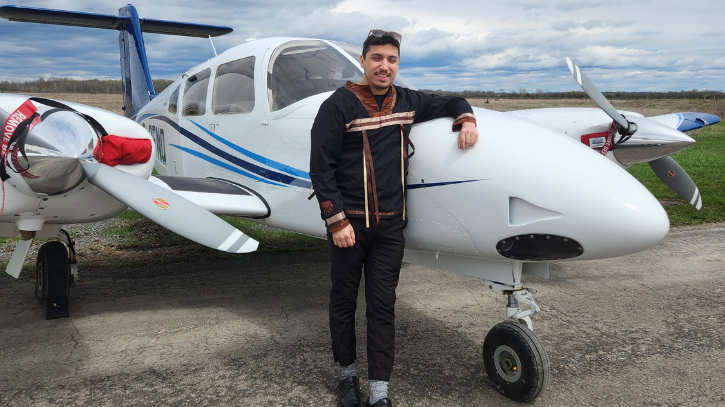
“At FNTI, I built a strong community with my classmates and had inspiring teachers pushing me forward. I soon realized that my dream of becoming a pilot was not only possible but within my grasp.”
FedDev Ontario has been instrumental in helping FNTI work with the aerospace industry. The Agency’s facilitation supported the procurement of temporary hangars to replace those that were destroyed in a 2022 fire and a turbine helicopter and simulator for the new one-year Rotary Wing Certificate Program that will start in September 2026.
Beyond the runways, FNTI’s 500‑kilowatt solar field offsets the environmental footprint of flight training and powers future growth, including a planned 50,000‑square‑foot net‑zero facility. This project was also funded by FedDev Ontario and includes the purchase of a 1000-kilowatt battery system, providing a backup energy hub for the community.
To support the growing aviation program, Brant says plans are underway to complete its state‑of‑the‑art hangar, build a modern residence and pave the runways—investments that will allow FNTI to continue delivering its top‑tier training.
During National Indigenous History Month, Brant hopes Canadians reflect on the deeper story of this land, to have a better understanding of its treaties, the relationships between Indigenous people and the Crown, and the responsibilities we all share. At FNTI, students learn their histories, languages and nation‑to‑nation relationships as part of their experience so they can carry that knowledge and understanding back into their communities. Not only are they better able to serve, they become leaders grounded in who they are and an inspiration to those who follow.
Learn more about FedDev Ontario's funding recipients by visiting our impact stories page.